I got asked the question this weekend and it made me think.
People who live in condo generally don’t have a yard, or plants or grass. They may not have a washer/dryer and maybe can’t afford to upgrade. So what can you do to drop usage by 25%?
I got asked the question this weekend and it made me think.
People who live in condo generally don’t have a yard, or plants or grass. They may not have a washer/dryer and maybe can’t afford to upgrade. So what can you do to drop usage by 25%?
I had a lawn in my front yard. Emphasis on “had”. I took it out after realizing how much water it needed.
Grab a tape measure and measure your lawn. Start at one end and lay the tap measure down, if you run out of tape measure, stop in that spot, coil up the tape and start measuring again from that spot. Then add all the lengths together for that run. Then measure perpendicular from the run you just had so you end with a final Length x Width. Multiply the two numbers together to get your lawn area.
This page is meant to showcase how the numerous different kinds of tanks/bags/bottles you can use to transport RecycledH2O.
There may be cheaper places to buy tanks online, and I am not receiving any kind of compensation to link to these tanks. Do your research before you buy.
At most Recycled Water fill stations – there is a 300 gallon limit. Water is heavy, every gallon weighs 8.34 lbs. 300 gallons of water weighs 2500 pounds. Please choose a tank that will be supported by your vehicles holding capacity and not on what you think you need. Be safe!
Last Updated: 2/26/2018 – Updated everything, no longer maintaining hours of operation at each facility
So you’ve researched your tank, you’ve seen my setup, but where do you get free recycled water?
Note: Some fill stations require you to be a customer in their service area. Check with them first before going to get free recycled water.
Recycled Water Fill Stations in California
This was the original “getting started with recycled h2o” but was deemed too “wordy”. A new version was updated on Friday, July 8, 2016.
Getting Started
I bought a pickup truck last year, a Ram 1500. It has a 6’4″ bed which is about 4 feet wide over the wheels. This was key as it helped determine the kind of tank I could put in the back of the truck.

4′ wide between wheel wells
I looked in my owners manual or on the website for my truck and found out the truck bed supports 1200lbs. This information will be used in determining the tank and volume for the back of the bed.
Known Information
Part 1 – Getting Started With Recycled Water
Part 2 – Continues below
Part 3 – Tips & Tricks to Unload Recycled Water More Efficiently Added July, 7, 2015
The first time driving home was interesting. It took longer to get home, but I didn’t care. My lawn was dormant (probably dead) but I wanted to see if that would change. This would be the first of many loads.
Lets establish a baseline of how dead the front yard looked prior to watering.

Nearly dead grass, lilies suffering, etc.
Recycled Water is “Drought Resistant” meaning you can use as much of it as you want as long as you know where to get it and how to transport it.
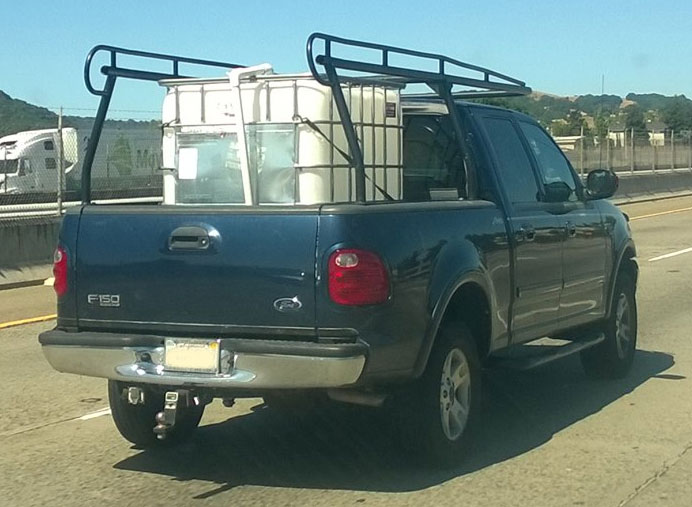
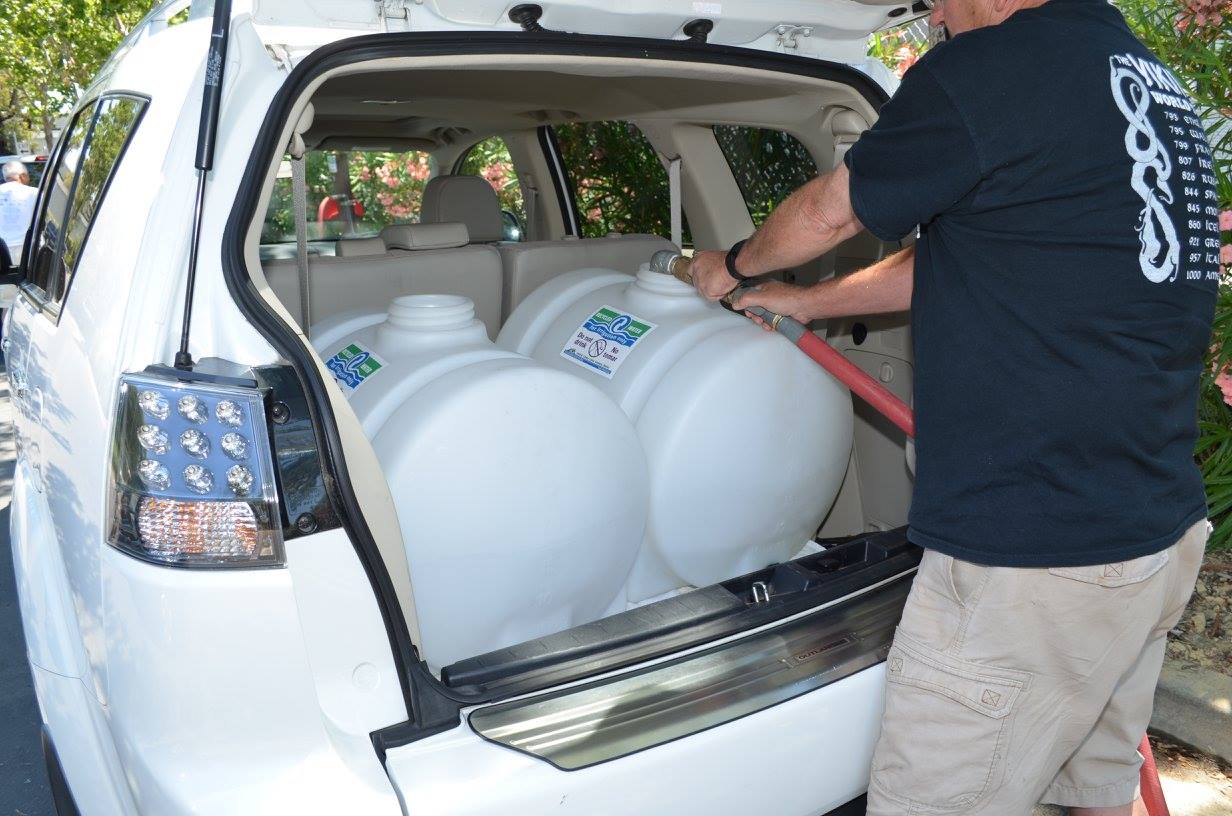
If you have a vehicle, you can haul recycled water from a treatment plant to your home and use it to irrigate your landscape – like lawns, flower gardens, trees, vegetable plants; or use it to make concrete or for dust control or re-filling your recirculating fountain or for flushing your toilets! Recycled water is perfect for anything that needs water but won’t be used for drinking by pets or humans.
Once you’ve established interest in hauling recycled water – there are three things you need to know before diving in.
Recycled H2O.net is a resource for homeowners who haul recycled water, it provides information on tanks, pumps, irrigation supplies as well what plants love or hate the resourceful liquid commodity. During the sunny hauling season this blog answers questions that everyone has – such as what tanks to buy for vehicles or how to unload once home. In the winter, when irrigation needs are low, the blog focuses on Rainwater Harvesting.
Recycled H2O is also known as Reclaimed Water, reused water or recycled water.
As written on Wikipedia – reclaimed water is treated waste water (sewage) that can be used in irrigation of plants/trees and should not be consumed by humans or animals. There are state and federal regulations that dictate the level of treatment for recycled water.
California is in the midst of an epic drought. Governor Jerry Brown just mandated a mandatory 25% reduction in water usage compared to 2013 for residential customers. For most, this means cutting back on sprinkler run time for lawns. For others this means finding other sources of water or making lifestyle changes.
This is where Recycled Water comes into play, it is drought resistant!
This blog is meant to catalog my adventures in design, transportation and usage of recycled water in my yard.
© 2026 RecycledH2O
Theme by Anders Noren — Up ↑